Showing posts with label RPG. Show all posts

Friday, August 5, 2022

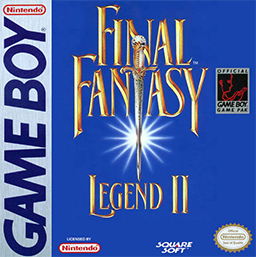
Final Fantasy Legend II (Game Boy) Review


Final Fantasy Legend II (Game Boy) Review


Release Date: 14 December 1990

Date Played: 8 August 2022


Introduction: 


Final Fantasy Legend II is actually the 2nd game in the SaGa series.  In Japan, it’s known as SaGa 2: Hihou Densetsu, but was given the Final Fantasy name in the West to drum up extra sales despite the fact that it has nothing to do with the series. It was critically praised when it was released, and has gone down in history as one of the best RPGs on the Gameboy. Known for its high difficulty and odd gameplay choices, it nevertheless captured the hearts of countless gamers out there and is not only on many top 10 best Game Boy games lists, but has even been included in some 100 greatest games of all time lists.


Personally, I feel that the people who rank the game this highly are looking at it through rose tinted glasses.  As someone who never played the game when they were a child, I found the game to be frustrating, unfair, and rather grindy. To me, it has some huge flaws that keep it from being a very fun experience.
Story: 


There’s really not much of a story here, despite what the peanut gallery of the internet would have you believe.  After your father abandons you as a child, you set out to find him and to seek out the 77 MAGI stones.  These stones, if all gathered together, will spell armageddon for the world.  It’s your job to collect them all before the bad guys do.  


The plot feels rather pedestrian, as of 2022.  I’m not sure how well it stood out back in 1990, when most RPGs centered around gathering a bunch of crystals, or stones, or what have you, but it certainly doesn’t inspire much imagination.  In addition to this, you also have to restore Isis back to her former glory… Something else that didn’t really hold up over time…


Just to clarify, you restore Isis, the goddess, back to her former glory… not the terrorist group.  


Gameplay:


It’s a standard 8-bit JRPG. If you’ve played one from back then, you know what you’re in for. Gameplay consists of you wandering around an overworld and entering towns where you can talk to townsfolk, buy items, rest at inns, and get information about where to go next.  Out on the overworld and in dungeons, you experience random combat encounters.  These take place in turn based fashion just like you would expect. You select your weapon of choice, beit a sword or a spell, deck out your character with armor, and micromanage stat increases.  With a few exceptions, that I’ll mention next, it feels pretty much like any standard RPG from the time period… and that’s totally fine.  It’s a good formula that still holds up.


What the game does differently, is introduce several new systems that both improve… and ruin an otherwise standard fare.  Firstly, when you start the game, you pick your party of 4 from several different races/classes.  There are humans, mutants, robots, and monsters.  Humans are good with combat, mutants excell at magic, robots use guns, and monsters evolve into different(sometimes better, sometimes worse) monsters when you give them food. It’s a cool idea, and you’re free to build your party however you’d like. Want to be a group of 4 robots, go for it.  Secondly, the game does away with XP and instead implements the most incredibly frustrating system for leveling up I’ve ever seen.  Essentially, your characters just level up their health and stats randomly based on what weapons they use.  If you want to level up strength, use a strength weapon, and then grind for a few hours hoping that your strength will randomly go up.  It’s mind numbing, and I hate it.  Considering the game is very difficult, you’re going to be spending a huge amount of your time grinding… and with no guarantee that you’ll make progress, that can be a motivation killer. Your health points increase at random intervals as well. At one point, I played for over an hour without gaining any additional health for my team.  Lastly, all of the weapons in the game have a limited number of uses before they break. These usually range from 15-50 attacks worth.  But, even at the top end of the scale, that won’t last you too long.  So, you need to equip your characters with several backup weapons so they aren’t left in a helpless state when their main weapon breaks.  To top this off, weapons are expensive, and replenishing them constantly eats away at your money.  So, you’ll need to do additional grinding to keep a full stock of weapons at the ready. These 2 choices the developers made are baffling to me.  I really, really, hate it and I can’t imagine what was going through their minds when they greenlit the ideas.  Also, as an added jab to the ribs, the game loves to hide the entrance to most dungeons in a secret location.  An NPC will say something like, “it’s 5 squares south and 7 squares east from the giant cactus in the desert to the south.” That’s fine for a location or two, but it seems to be the order of the day for this game. Get out of here with that esoteric garbage.  It’s just another way to pad out the game and waste everybody’s time.


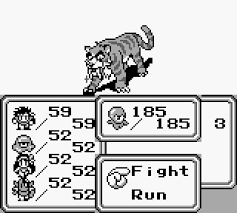
As for the random combat encounters, they are ample.  Very ample.  Perhaps the most I’ve ever seen in a game.  Oftentimes, you can’t take even a single step without getting into another fight.  Many of the combat encounters will have 6-15 enemies in them.  The enemies will come in stacks of the same type that are all queued up and blocking each other.   Say you run into a spider, skeleton, and a ninja.  Well, there may be 5 spiders, 5 skeletons, and 5 ninjas all in a row that you have to defeat.  It can be overwhelming and they all tend to attack your main character.  There’s nothing like being hit 6 or 7 times in a row before you really have a chance to act. Even if you can 1-shot an enemy, he’ll be blocking the enemy behind him from your attacks.  So, even if you’re super overpowered for the area you’re in, you’ll still be taking hits from the enemies because of them essentially being meat shields for each other.


Luckily, you can save your game at any time from the menu.  This is really helpful for gaming on the go, and mitigating any draconian garbage that the game throws at you. It’s one of the few saving graces of the game.


Presentation:


The game has some pretty great music, and I’ve seen some reviews where people say it’s their favorite RPG music of all time. Now, I’m not sure I would go that far, but it’s certainly catchy and fits well with the general atmosphere the developers were going for.  The overworld music and combat music are standouts and honestly deserve to be in a better game.  At least you’ll get to hear them a lot with all of the grinding you’ll be doing.


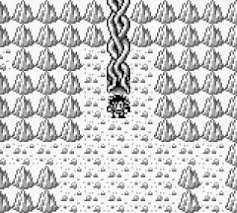
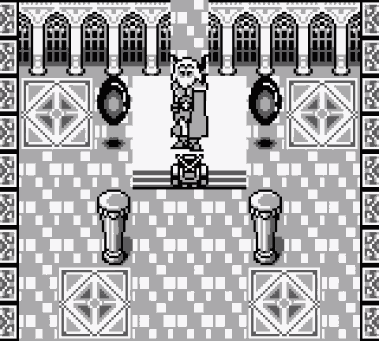
The game looks like a standard 8-bit RPG on the Game Boy.  I’m not really sure what else to say.  The enemy sprites are well done and can be interesting to look at, and the character models are cute and look a lot like Final Fantasy on the NES.  The overworld isn’t much to look at, and can be rather barren and empty at times, but the dungeons have some interesting detail here and there. 


Conclusion:


If this game eliminated the frustrating leveling system and weapon breaking mechanics, it would be much better.  But even then, it would only be a fairly average RPG in my eyes. Maybe I’m being a little hard on it because I don’t have any nostalgia for it, but it really didn’t do anything for me… This is very disappointing, because everyone says that it’s the best in the Final Fantasy Legend series.  Considering I still have the 3rd game in the series left to play, it’s imposing a sense of dread in me that I’m not at all thrilled about.  


I watched a review where the guy said that there was about 6 hours of story in this game, and around 9 hours of grinding.  I’m not sure how a modern gamer would consider this acceptable, nor am I sure how someone in 1990 would consider it either.  It’s just such a waste of your precious time.  Not being able to consistently level your characters when you grind, having to constantly spend all of your money to replenish your breaking weapons, running out of weapons in the middle of a dungeon and not being able to damage the overly unfair enemies, and the hidden dungeon entrances that require to to decipher coordinates are all a bit too much and really hurt the whole experience. This leaves me not only in a position where I wouldn’t recommend the game, but I will come right out and tell you to avoid it if you don’t have a strong sense of nostalgia for it.


Final Status: Played

Final Score: 4/10 (Bad)


Friday, April 22, 2022

King's Knight (NES) Review

King's Knight (NES) Review

Date Released: 1989

Date Played: 21 April 2022


Introduction:

Have you ever heard the story where the game developer Square had lost all of their money and were going out of business?  They had one last ditch effort to make something good... one Final game.  They made a fantasy RPG, aptly named Final Fantasy... It saved the company, became one of the most beloved and highest grossing franchises of all time, and made Square one of the biggest media corporations in Japan.  But, what no one ever mentions is why they were going out of business in the first place.  Well, the reason is that they were making terrible games!  King's Knight is one of those games and is pretty much despised by everyone who has ever played it.  There is an interesting genre mashup concept here, but the execution is so dreadful that it makes this game a bit of a nightmare to play.


Gameplay:  

The game is supposed to be a blend of a vertically scrolling shmup mixed with an RPG.  While there are a few tangential mechanics that you might associate with an RPG, it doesn't really feel like anything more than an overly convoluted and frustrating shooter with mechanics that make the game less fun instead of more deep.  You can tell Square were highly influenced by the game Knightmare on the MSX computer as the graphics, gameplay, and overall presentation are very reminiscent of that game.  While Square's attempt is more... ambitious, it falls far short of that game in terms of fun and playability.

You play as 4 different characters, Rayjack the Knight, Koliva the Wizard, Barusa the Monster, and Toby the Kid Thief.  All of these characters are played in this order and each one has its own stage.  If you die as one of the characters, you lose them for the rest of the playthrough and you move onto the next in the line-up and attempt their stage. This continues until you've played as all four of the characters.  Finally, all of surviving characters team up to take on the 5th and final stage of the game and save the princess.

Gameplay consists of auto-scrolling stages where you shoot enemies coming down from the top of the screen like any other vertical shmup.  Only this time, the screen is absolutely inundated with tons of environmental obstacles that you have to either destroy or avoid.  These consist of pitfalls that are invisible until you hit them, trees, mountains, tomb stones, spires, and all other manner of annoyances.  You can destroy these with your shot to reveal powerups, healing items, items that hurt you if you touch them, secret spells, alternate underworld entrances, etc..  More often than not, though, you'll reveal an enemy that bum rushes you and takes a significant chunk off your health bar. In fact, most of the enemies in the game come from destroying these obstacles. Even though you don't want to destroy any of them because baddies come flying out, destroying these blocks is really the main objective of the game because they contain the items and powerups you'll need to succeed.  It's just unfortunate that most of the screen is covered with them, so you'll be zipping around, destroying everything you can while avoiding the hail of enemy bullets in an attempt to locate what you need. The focus of destroying these blocks makes the game feel more like Breakout to me.  Half the time you ignore the enemies on the screen to focus your shots on destroying part of a hillside or something. It become abundantly obvious that you essentially have to memorize the levels and the locations of all of the powerups to have a chance to progress.  Not only that, you'll have to memorize all of the hazards of the level like the stone walls that appear out of nowhere and cause you to get into situations where death is certain because of the scrolling. There are also sections of every stage where the character has to venture out into the water.  When this happens, there is a strange sort of slippery inertia that makes them feel like they're slipping around on ice.  It's almost impossible to control any of your party with any sort of accuracy and these sections usually spell certain death for the weaker characters.  I could see having something like this one or two times in the game, but it feels like it makes up about a third of each character's stage and is controller throwingly frustrating to play.

The overall objective is to powerup each character as much as possible so that when you reach the final level, they are all powerful enough to tackle the final boss. Sadly, this is more or less of a pipe dream because of the terrible execution of the game.  Firstly, the game is brutally difficult to a point there the developers feel like they are trolling you.  Most of the obstacles you destroy provide you with a negative benefit like an enemy to the face or a health down.  This makes all your hard work tapping away on the fire button feel fruitless and even with a turbo controller it isn't much better.  Secondly, every single character has to make it through their stage alive or you can't complete the final stage.  Lastly, every character has to locate all of their hidden spell tokens during their own stage which can be hidden not only in the stage itself, but also in the underground alternate paths you can take.  If you miss a single one of these on any of the characters, the game will put up an impassable wall at the end of stage 5 and prevent you from even attempting to fight the final boss. This means you have to play perfectly, find every single secret without missing anything, make sure to find all the powerups to max out your characters, and know exactly when to use all of your spells during the final stage.  It's basically just a repetitive exercise in memorization.  

Once you reach the final stage, all of the characters form up into a circle with the one located at 12:00 firing forward.  There are tons of symbols scattered around the floor of the stage that will let you rotate your character's formation by 90, 180, or 270 degrees.  You're supposed to memorize the order to hit these rotations so that the correct character will be in position at the correct time to use his magic ability.  If you miss one of these moments, you won't really be able to finish the stage and will have to start the whole game over. It just adds about another 20 chances for you to make a mistake and completely ruin your chance at finishing the game.  The developers couldn't have possibly thought this was a good idea when they were playtesting it, and I'm not sure I understand how it made it through quality control.

If you do manage to memorize where every single item is, collect them all, play through all of the stages without dying a single time, memorize the exact time to use each character's spells during the final level, and kill the final boss,  then, you'll get to say you finished the game.  All in all, it takes about 23 minutes or so.  So, I guess the enjoyment of this game is supposed to be derived from learning where all of the items are located, but playing the game is so frustratingly difficult that there is little here to spark any sort of joy in the player.


Presentation:

The game looks pretty bad even for an NES game.  Each character's stage is made to suit them thematically.  Rayjack the Knight fights through a colorful and forested area that is the most fun in the game.  Kaliva the Wizard fights through a white haunted town full of white ghosts, white tombstones, white buildings.   This would be fine, except that the enemy bullets are ALSO white.  So, it can be very difficult to see them.  The wizard is the weakest character of the game and his stage is the most difficult.  So, your failure on the second stage is what will usually ruin your run at the final boss.  The third stage is a green and swampy are.  You play as Barusa the Monster... who is also green.  And guess what?  The bullets are green as well.  So, you have the same issue as the white stage.  Luckily, the monster can take a bit more of a beating so you have a tiny chance to succeed.  Lastly, Toby the Theif's level is similar to the first one and has a bigger variance of color.  The bullets are contrasting this time so you'll have an easier (not easy... just easier) chance of seeing what you're doing.  

On top of the strange color pallet choices, the game is also blocky and without much definition.  It kind of gives off a Ghostbusters vibe, if you've ever seen that on NES.  There's very little texture or shading on any of the sprites and the whole experience feels muddled and flat. 

To accompany your frustrations is a short, repetitive, and oddly uplifting soundtrack that you will begin to tune out after it loops for the 10th time in one stage.  I probably got to listen to it 1000 times while playing this game, and I don't think I could hum you a single bar of it.  It's a shame, because Square is typically renowned for their stellar music.  If only that were the case here.  Square had a chance to save face with some better music, but once again, they squandered their chance in this category as well.

Conclusion:

King's Knight was built around a cool idea of leveling up a team of characters over several stages before they meet up for an epic final battle.  Even rolling this idea into a vertical shmup is a cool premise.  The problem is that the game is more focused around locating and memorizing hundreds of powerup items, secret objectives, alternate routes, and guaranteed death hazards.  To make matters worse, you have to play perfectly and find every secret or the game locks you out of completing it.  That's just unfair even for "Nintendo Hard" times.  This game can still be had pretty cheaply and if you're a big collector like I am, you'll probably pick it up at some point.  But, if you do, don't spend hours on it.  Play it a couple of times just to experience it and then put it back onto the shelf, because this game is nothing more than a curiosity and isn't really worth your time.

This game feels like some executives were out drinking one night and came up with a hairbrained idea for a video game.  They then took it to the design team and just gave them a bunch of random ideas they had scribbled on the back of some cocktail napkins.  The development team didn't really understand what the executives were hoping for and were too embarrassed to ask any questions. Plus, they didn't have the technical skills to execute it anyway, so they just phoned in the whole project to get the executives off their back...

Final Status: Played

Final Score: 3/10 (Awful)