Showing posts with label puzzle platformer. Show all posts

Monday, July 25, 2022

Donkey Kong (Game Boy) Review


Donkey Kong (Game Boy) Review


Release Date: 1994

Date Played: 25 July 2022


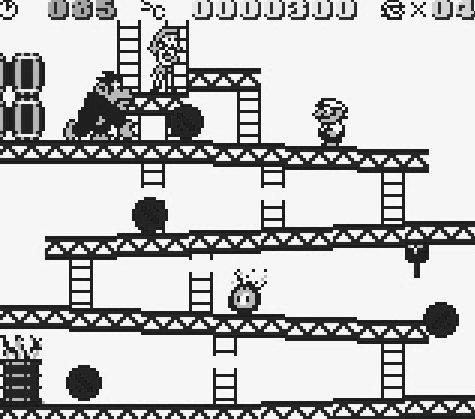
Donkey Kong on the Game Boy, A.K.A. Donkey Kong ‘94, is one of the best games on the entire console.  When I first received it as a present back when I was a kid, I wasn’t too thrilled about it.  “Donkey Kong is lame… and old,” I thought to myself.  In the world of Street Fighter II and Mortal Kombat, who wanted to play some stupid arcade game from over a decade ago.  Begrudgingly, and mostly because I didn’t have anything else to do, I popped the game into my Game Boy and was greeted by the same opening stage that I had seen countless times.  After a few attempts, I had managed to play through the 4 stages of the arcade game, and as I saw DK plummet to the bottom of the screen, I was expecting the game to loop as it always does.  But, there before my eyes, the big ape got up, climbed back up the screen, grabbed Pauline, and escaped with her.  What greeted me next, was a totally different game. I was shocked, as were a lot of people who played it at the time. It never occurred to me that the opening 4 stages of Donkey Kong ‘94 were nothing more than a ruse to subvert your expectations before thrusting you into one of the best puzzle platformers ever made. The game that greeted me from that point forward was fresh, addictive, fun, engaging, and very memorable.  I look back on it with a huge amount of nostalgia, but even with those rose tinted glasses, the game holds up unbelievably well.  Just ask my 5,7, and 10 year old cousins that couldn’t put the game down.  That’s saying a lot, considering their tablets were right at hand. 


Gameplay:


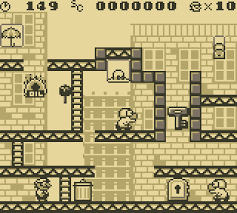
After the 4 initial stages, you play through 9 worlds (with 97 additional stages) in an attempt to get back Pauline.  The premise is simple, grab the key and take it to the exit. Unsurprisingly, there are pits, spikes, enemies, switches, gates, conveyor belts, water hazards, climbing chains, ladders, and every other type of obstacle you could imagine that prevent Mario from having an easy time. Every stage is a puzzle that could involve pulling switches, using precise timing, to pixel perfect platforming, and everything in between. To assist him, Mario has a backflip as well as a headstand into super jump move that will allow you to traverse some of the more tricky sections.  Not only that, in each stage are 3 collectable items.  If you manage to get them all, you will be awarded with a casino mini game at the end of the stage that will grant you extra lives. Every 4 stages, you face off against DK himself (and sometimes DK Jr.) in another attempt to save your ever elusive girlfriend. Besting the ape not only gives you an opportunity to save your progress, but also to rack up some extra lives based on your score. The game can be tough at times, but always fair, and the insane abundance of extra lives is welcome.  It shouldn’t be uncommon for most players to hit the maximum of 99 extra lives before reaching the end of the game.  


Each world is based on a different theme and gameplay mechanic. You’ll go through the Big City, Forest, Ship, Jungle, Desert, Airplane, Iceberg, Rocky-Valley, and finally the Tower as you progress through the ever increasingly complex (and difficult) stages.  Luckily, despite the large amount of them you’ll encounter, everything remains fresh throughout the game’s duration, and there is a near perfect difficulty curve that makes you really feel like you’re getting better and never stuck too long. Although some of the puzzles can be a bit tricky and might take a few attempts to figure out exactly what you’re supposed to do, you’ll eventually have a eureka moment as well as a good sense of accomplishment for clearing the stage. Adding to the overall sense of satisfaction for playing through the game,  the sheer amount of ideas that Nintendo came up with for this game will send your head spinning. It’s such a simple set of mechanics, and they are explored to their fullest. Every stage feels fresh and unique, and the overall length of the game is ideal and never overstays its welcome.


The play control is also stellar and Mario’s movements aren’t clunky at all. Since there is an abundance of platforming, there’s always the opportunity to fall.  Doing so from a medium height will send Mario tumbling, go a little higher, and he’ll bonk his head and be stunned, go even higher… well, that will spell curtains for him.  You’ll need to master all of the little tricks that Mario can do in order to complete some of the stages. The programmers never throw too much at you all at once, and if you can focus, you’ll be able to succeed.


Presentation:  


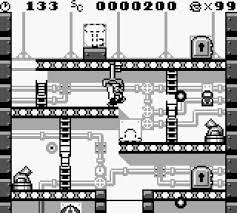
The game looks fantastic for a Game Boy game and everything is clear and visible (especially if you’re playing on a GBA, Super Game Boy, or Gamecube adapter).  Donkey Kong has a great design and is always happy to display his ample…posterior after landing on his head or climbing the ladders to the next stage.  Everything else is charming and very reminiscent of the original Donkey Kong arcade game.  It looks like it’s supposed to, and that’s all you can ask for.  Not only that, this is one of the few games that has Super Game Boy compatibility, and if you decide to play it that way, you’ll be given a Donkey Kong arcade cabinet as your gameplay border.  Also, you’ll have some enhanced music to enjoy.  It’s a nice bonus, and little things like this are always appreciated.


Speaking of the music, it’s fantastic.  As with all Mario games that I can remember, the music is ultra catchy, memorable, and elevates the entire experience to a whole new level that most other games can only dream of achieving.  The composer, Taisuke Araki, really knocked it out of the park and it’s strange to me that his only other noteworthy composing work was for Wave Race on the Nintendo 64. I feel like his talents were underutilized and if he had been given more opportunities, could have been a well known composer in the video game community.


Conclusion:


Donkey Kong ‘94 is probably my favorite Game Boy game of all time. I still remember it tricking me with its opening stages… 28 years ago… and it’s a fond and nostalgic memory.  Replaying the game now, and actually beating it for the first time, I didn’t feel like the game lost any of its luster and it’s just as good as I remembered.  Actually, it’s better, because I recognize good game design now, and let me tell you, this game has it. If you dive into the peanut gallery of the internet, you’ll find a small contingent of fans praising this game and hailing it as a masterpiece. Although it seemed to be mostly forgotten shortly after it’s release, it has maintained almost universal acclaim. It is even listed in some of the “100 Best Games of All Time” lists. If you like Mario, Donkey Kong, puzzle games, platformers, or a good time, you should definitely play it.  I honestly don’t have a single bad thing to say about this game.  For a pure video game, it’s perfect.


Final Status: Completed

Final Score: 10/10 (Masterpiece)


Thursday, February 24, 2022

Thomas Was Alone (PS4) Review


Thomas Was Alone (PS4) Review

Date Released: 25 November 2014

Date Played: Summer 2017


Introduction:

There's a famous quote about the rock band, The Velvet Underground, that basically says, "The Velvet Underground only sold about 2000 albums, but every person that bought that album started their own band."  Thus, you end up having one of the most influential bands of all time despite a lackluster initial reception.  I feel like Thomas Was Alone is the Velvet Underground of the indie game scene.  The general population looks on the game with a general fondness and it received some good praise from the critics.  But, the people that loved this game... really loved it.  Several reviewers I watched online talked about how it changed their life and inspired them to become game developers. Others claimed it changed the way that they viewed video games and even personal relationships in their life.  Even Youtube megastar, PewDiePie, said it was his favorite indie game of all time in one video.  Regardless of how you feel about the game, there's certainly a certain mystique surrounding it that can be rather polarizing. It's an important entry in the indie game scene for sure and even gamers who have no desire to play it should at least be made aware of its existence and the ideas that it tries to address.

Thomas Was Alone was originally a Flash-based browser game that was later turned into a more complete package and ported to almost every platform out there.  Mike Bithell, the creator, wanted to create a game that was strikingly simple in its presentation but had both a compelling narrative and fun gameplay to round out the package. Danny Wallace, the humorist, was brought in to perform the game's important narration and to give the game an overall somber feel while still providing a healthy does of British dry wit. The whole package is designed to focus on the feelings and aspirations of the cast and is more of a character study over its other elements.


Story, Themes, Gameplay, and Presentation:

When you boil it all down, Thomas Was Alone is a puzzle platformer that is focused on the concept of loneliness.  You begin as Thomas, the titular protagonist of the game, and he is... alone.  Represented by nothing more than a simple rectangle, you control Thomas with the analog stick and only have the ability to jump in side-scrolling fashion. In each level, your objective is to get Thomas into a portal that is represented by a white outline of his body. The stages start out very simply in the beginning and become more and more complex and difficult as you progress through the game's chapters. All the while, you'll be listening to the fantastically delivered narration that describes Thomas' feelings, motivations, and objectives.  Despite only being a rectangle, Thomas has a pretty well developed personality for a video game character and it's very easy for the player to sympathize with his plight.

Along the way, you meet other characters represented by other quadrilaterals who have their own personalities, motivations, and weaknesses.  As they become Thomas' companions, you all begin to work together to solve the more and more increasingly complex puzzles and it won't be long until you're wracking your brain trying to figure out how to get each of these pieces into their respective portals to finish the stage.  Switching between the various characters is done with the simple press of a button and they will all usually have to assist each other by providing a height boost, serving as a floating platform, or by sneaking through at tight space where the other pieces are ill-suited for that particular task.  Over the course of the game's 3-5 hour length, you'll have many mechanics introduced to you to throw more and more complexity into the game's workings.  You'll encounter timing puzzles, deadly spikes, trampolines, and all other manner of hinderances to impede your progress.  Dying is common, but luckily, you respawn immediately so the game never becomes too tedious.  You will, however, need to bring your thinking cap and at least some modicum of platforming skills.  

The overall story involves the characters being escaped A.I. components that have escaped from a computer program or some other such nonsense. Everyone is trying reach something called the Emergence which is where they become actual entities rather than existing as only computer code. There are other AIs that act as antagonists and attempt to reach the Emergence before Thomas and his friends or to derail their progress.  It's honestly and overly convoluted plot for such a simple looking game and really only serves as a basis for the player to work through the emotional and conceptual themes surrounding the game.  Lonliness, friendship, betrayal, support, trust, and many other concepts are the real focus of the game and are what makes it stand out in my memory.

The visual style of the game is extremely basic with mostly dark blue, purple, and black backgrounds that have an austere presentation.  As mentioned earlier, the characters themselves are nothing more than colored geometric shapes (despite their much more developed personalities and desires).  The game doesn't really need fancy graphics and it was a very wise idea to intentionally tone down the visual presentation in order to make the concepts the game attempts to hammer home much more impactful.  A lot of flash isn't needed when your puzzles, mechanics, and themes are this well done.  

Another spot where this game truly shines is in its masterful use of music. Having a computer program represented by a rectangle as your main character and giving it a large host of human emotions that the gamer is supposed to empathize with is a difficult bridge to gap; and the perfectly blended artificial chip-tune sounds with actual instruments such as guitar, piano, and orchestral strings echo this sentiment extremely well.  Sometimes, the soundtrack is unobtrusive and minimalistic to give a relaxed mood and at other times it becomes heavy and pensive to accentuate the intensity that's building in the gameplay.  It encompasses a huge range of emotions and flows masterfully along with the narrative developments in the game. In my opinion, the game is carried by its soundtrack and would not have been able to convey it's ideas without it.


Conclusion:

Thomas Was Alone is a very important game that has continued to maintain its reputation as an indie darling for over a decade.  I feel that it succeeds in it's attempts to have a good puzzle game that deals with strong human emotions but presents everything in a very minimalistic manner.  It's a worthwhile journey to take, albeit a little sad and melancholy for large parts of its duration. The narration and characters are all very likeable and quite memorable.  Even several years, and a few hundred games played in interim before returning to this game, I had a good recollection of Thomas and his friends and looked back on them fondly.

Sadly, unlike many other puzzle based games, this one doesn't really have the addictive sort of gameplay that you are normally expecting and it instead serves as a sort of background task you're attempting to complete while you listen to the narration and try to put yourself into the mental mindset of Thomas and his companions. This is typically the modus operandi of any puzzle platformer that you will encounter, so it was to be expected. If I had to give you the too long, didn't read impression of this game I would say that Thomas Was Alone is very much a one-and-done sort of game, and I would highly recommend it to someone who is a fan of games that are more thought provoking rather than mechanically focused.  I had a good time with it, but once it was over, it isn't something I'm really craving coming back to visit anytime soon.

Final Status: Completed (game beaten and all trophies earned)

Final Score: 7/10