Showing posts with label Subversive. Show all posts

Monday, July 25, 2022

Donkey Kong (Game Boy) Review


Donkey Kong (Game Boy) Review


Release Date: 1994

Date Played: 25 July 2022


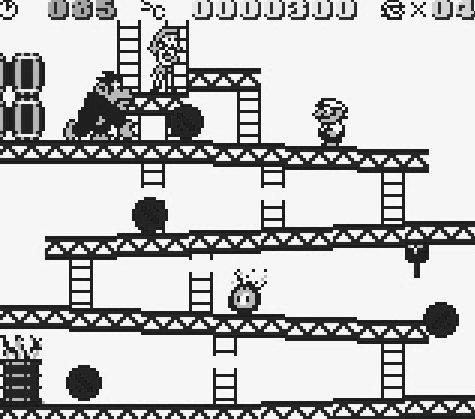
Donkey Kong on the Game Boy, A.K.A. Donkey Kong ‘94, is one of the best games on the entire console.  When I first received it as a present back when I was a kid, I wasn’t too thrilled about it.  “Donkey Kong is lame… and old,” I thought to myself.  In the world of Street Fighter II and Mortal Kombat, who wanted to play some stupid arcade game from over a decade ago.  Begrudgingly, and mostly because I didn’t have anything else to do, I popped the game into my Game Boy and was greeted by the same opening stage that I had seen countless times.  After a few attempts, I had managed to play through the 4 stages of the arcade game, and as I saw DK plummet to the bottom of the screen, I was expecting the game to loop as it always does.  But, there before my eyes, the big ape got up, climbed back up the screen, grabbed Pauline, and escaped with her.  What greeted me next, was a totally different game. I was shocked, as were a lot of people who played it at the time. It never occurred to me that the opening 4 stages of Donkey Kong ‘94 were nothing more than a ruse to subvert your expectations before thrusting you into one of the best puzzle platformers ever made. The game that greeted me from that point forward was fresh, addictive, fun, engaging, and very memorable.  I look back on it with a huge amount of nostalgia, but even with those rose tinted glasses, the game holds up unbelievably well.  Just ask my 5,7, and 10 year old cousins that couldn’t put the game down.  That’s saying a lot, considering their tablets were right at hand. 


Gameplay:


After the 4 initial stages, you play through 9 worlds (with 97 additional stages) in an attempt to get back Pauline.  The premise is simple, grab the key and take it to the exit. Unsurprisingly, there are pits, spikes, enemies, switches, gates, conveyor belts, water hazards, climbing chains, ladders, and every other type of obstacle you could imagine that prevent Mario from having an easy time. Every stage is a puzzle that could involve pulling switches, using precise timing, to pixel perfect platforming, and everything in between. To assist him, Mario has a backflip as well as a headstand into super jump move that will allow you to traverse some of the more tricky sections.  Not only that, in each stage are 3 collectable items.  If you manage to get them all, you will be awarded with a casino mini game at the end of the stage that will grant you extra lives. Every 4 stages, you face off against DK himself (and sometimes DK Jr.) in another attempt to save your ever elusive girlfriend. Besting the ape not only gives you an opportunity to save your progress, but also to rack up some extra lives based on your score. The game can be tough at times, but always fair, and the insane abundance of extra lives is welcome.  It shouldn’t be uncommon for most players to hit the maximum of 99 extra lives before reaching the end of the game.  


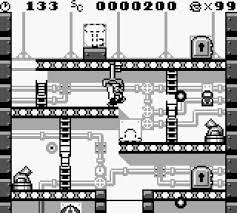
Each world is based on a different theme and gameplay mechanic. You’ll go through the Big City, Forest, Ship, Jungle, Desert, Airplane, Iceberg, Rocky-Valley, and finally the Tower as you progress through the ever increasingly complex (and difficult) stages.  Luckily, despite the large amount of them you’ll encounter, everything remains fresh throughout the game’s duration, and there is a near perfect difficulty curve that makes you really feel like you’re getting better and never stuck too long. Although some of the puzzles can be a bit tricky and might take a few attempts to figure out exactly what you’re supposed to do, you’ll eventually have a eureka moment as well as a good sense of accomplishment for clearing the stage. Adding to the overall sense of satisfaction for playing through the game,  the sheer amount of ideas that Nintendo came up with for this game will send your head spinning. It’s such a simple set of mechanics, and they are explored to their fullest. Every stage feels fresh and unique, and the overall length of the game is ideal and never overstays its welcome.


The play control is also stellar and Mario’s movements aren’t clunky at all. Since there is an abundance of platforming, there’s always the opportunity to fall.  Doing so from a medium height will send Mario tumbling, go a little higher, and he’ll bonk his head and be stunned, go even higher… well, that will spell curtains for him.  You’ll need to master all of the little tricks that Mario can do in order to complete some of the stages. The programmers never throw too much at you all at once, and if you can focus, you’ll be able to succeed.


Presentation:  


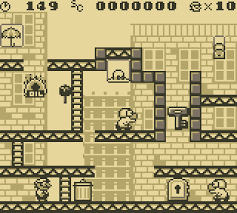
The game looks fantastic for a Game Boy game and everything is clear and visible (especially if you’re playing on a GBA, Super Game Boy, or Gamecube adapter).  Donkey Kong has a great design and is always happy to display his ample…posterior after landing on his head or climbing the ladders to the next stage.  Everything else is charming and very reminiscent of the original Donkey Kong arcade game.  It looks like it’s supposed to, and that’s all you can ask for.  Not only that, this is one of the few games that has Super Game Boy compatibility, and if you decide to play it that way, you’ll be given a Donkey Kong arcade cabinet as your gameplay border.  Also, you’ll have some enhanced music to enjoy.  It’s a nice bonus, and little things like this are always appreciated.


Speaking of the music, it’s fantastic.  As with all Mario games that I can remember, the music is ultra catchy, memorable, and elevates the entire experience to a whole new level that most other games can only dream of achieving.  The composer, Taisuke Araki, really knocked it out of the park and it’s strange to me that his only other noteworthy composing work was for Wave Race on the Nintendo 64. I feel like his talents were underutilized and if he had been given more opportunities, could have been a well known composer in the video game community.


Conclusion:


Donkey Kong ‘94 is probably my favorite Game Boy game of all time. I still remember it tricking me with its opening stages… 28 years ago… and it’s a fond and nostalgic memory.  Replaying the game now, and actually beating it for the first time, I didn’t feel like the game lost any of its luster and it’s just as good as I remembered.  Actually, it’s better, because I recognize good game design now, and let me tell you, this game has it. If you dive into the peanut gallery of the internet, you’ll find a small contingent of fans praising this game and hailing it as a masterpiece. Although it seemed to be mostly forgotten shortly after it’s release, it has maintained almost universal acclaim. It is even listed in some of the “100 Best Games of All Time” lists. If you like Mario, Donkey Kong, puzzle games, platformers, or a good time, you should definitely play it.  I honestly don’t have a single bad thing to say about this game.  For a pure video game, it’s perfect.


Final Status: Completed

Final Score: 10/10 (Masterpiece)


Thursday, June 9, 2022

Doki Doki Literature Club Plus! (Switch) Review


Doki Doki Literature Club Plus! (Switch) Review

Date Released: 30 June 2021

Date Played: 9 June 2022

When Doki Doki Literature Club initially released on PC back in 2017, it was a cultural phenomenon that took the gaming community by storm. You couldn't go onto Youtube or Twitch without seeing scores of streamers playing the game and documenting their reactions to it.  The game garnered so much attention that it became a cult classic that's undoubtedly wormed its way into the mind of countless gamers around the world.  This is not only due to the fact that the game was initially given away for free by it's developer, Team Salvato, but also because of it's masterful and original method of story telling.  See, Doki Doki Literature Club takes a long standing and much maligned genre, the visual novel/dating sim, and turns it on its head by turning it into a horror game that subverts your expectations.  It deals with strong subject matter like depression, anxiety, abuse, and loneliness and presents them in a shocking manner that stands in stark contrast to its bubbly and cute façade.  Due to the game's plentiful surprising moments, it is extremely difficult to review because I don't want to spoil the content for anyone who's yet to play it.   

After the huge success of Doki Doki, the game has received a physical release in the form of Doki Doki Literature Club Plus! on all of the major systems.  It has some additional content including 7 additional chapters that serve as a prequel to the story.  I'll be reviewing the Nintendo Switch version here.


Story/Gameplay:

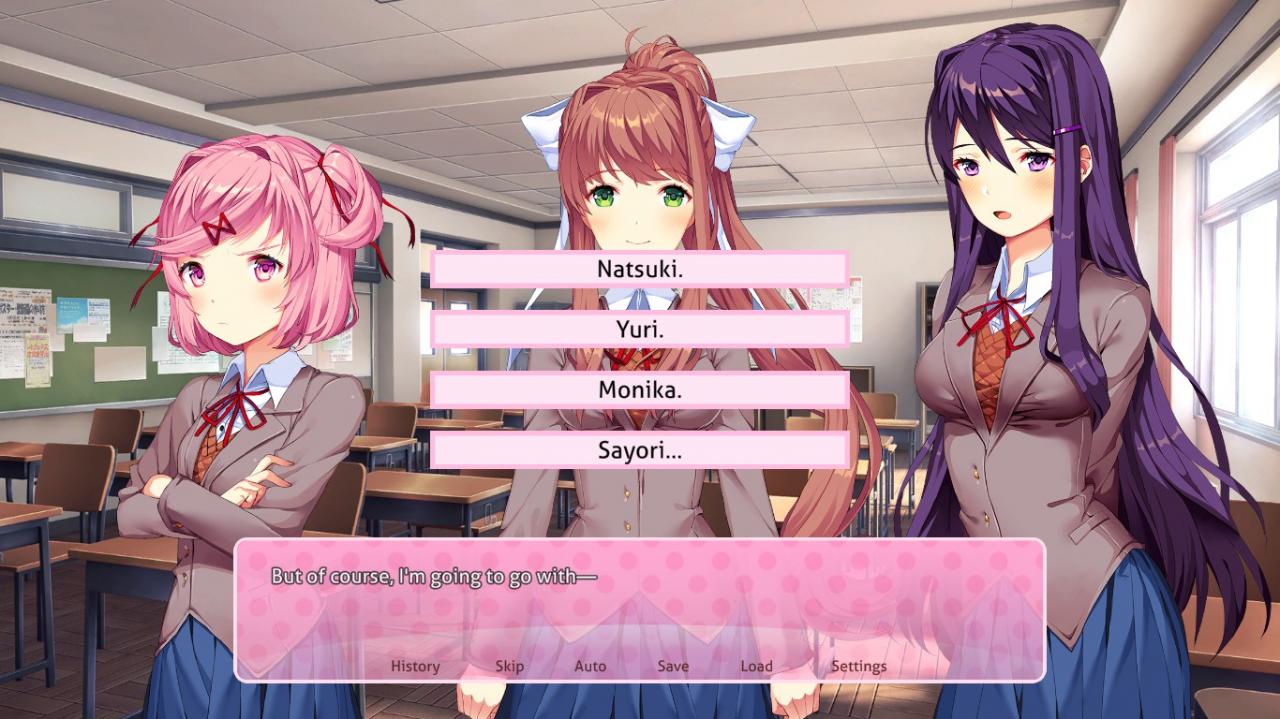
Since it's a virtual novel/dating sim, the only real gameplay is making choices when prompted with a question/decision.  The rest of the gameplay experience is just reading.  

You play as an unnamed male protagonist who is pressured by his neighbor and lifelong friend, Sayori, into joining their school's literature club. On his first visit, he discovers that the club is full of (as he describes it), "incredibly cute girls!"  So, he decides to join in an attempt to woo one of the girls into being his girlfriend.  If you've ever played a dating sim before, you'll know that this is all par for the course.  Nothing about it feels any different than the countless other dating sims out there and if it weren't for the warning at the beginning of the game touting the horror elements of the game, then there would be little here to keep you interested (unless, of course, you're a huge fan of dating sims).  

All the members of the literature club are given an assignment to write a poem each night and share them with the group the next day.  Writing said poem consists of selecting 20 words from a series of lists and attempting to select the word that most closely associates with the personality of one of the four girls you're most interested in dating. Sayori is the girl next door (literally), Yuri is the dark and mysterious girl, Natsuki is the small, snarky, and cute girl, and Monika is the out-of-your-league homecoming queen type.  After "composing" your poem, you'll present it to everyone in the club as they, in turn, reveal their poems to you. As you focus your compositions more and more towards the girl of your choice, their attitudes change towards you and the content of their poems shifts from observations about the world to more romantic leanings towards the protagonist. These poems are all really done well and are very thought provoking.  I personally enjoy poetry, and have read my fair share, and I thought that the different writing styles of all the girls were quite unique and their content had some real merit.  It's certainly much better than the average poems I've read over the last few years.

As you work to progress your relationship with the girls, tensions rise between them as they vie for your attention.  There are arguments and hateful comments, that begin to cause rifts within the group. Just as things begin to heat up (not only in terms of animosity between the girls, but also in terms of affection between you and the girl you've chosen), talks begin about preparing for the school's club festival.  This is where all of the clubs around the school set up an exhibit to show what they are all about and try to recruit new members.  This all builds up to your first "date" with the girl you've selected.  It's at this point, that the game takes a drastic shift.  Now, I'm not going to give anything away, but be aware that what happens from this point on is absolutely shocking and unforgettable.  Everything you thought you knew is thrown completely out of the window as a meta-fever dream of shock and confusion sets in.  It's unlike anything I've ever experienced in any other game and feels like a roller coaster that has you questioning your own sanity at times. 

I won't say anymore than that.  If you want to know more, you'll have to experience the game for itself. When I initially played it on PC, back when it came out, it became one of the most memorable gaming experiences that I've ever had.  It really stuck with me... and continues to do so even to this day.  

Presentation:

The game has a very cute presentation with lots of pink, hearts, cute girls, bouncy music, and everything you can think of to make a dating sim appealing.  Of course, it's made this way to trick you into thinking everything is ok before the whole experience goes haywire.  Still, it's very appealing and has a nice charm to it. If I had to describe the style, I would call it, "Female Japanese Middle Schooler."

The character designs are outstanding as is their artwork.  Of course, this is essential to make you want to date the various girls.  If they weren't charismatic and drawn in an attractive way, you'd lose interest before the game tone shifts. All of the characters are very likable and it feels like you really develop a connection with each and every one of them.  This is certainly reinforced by the writing and dialog in the game that is remarkably well done and very believable.  In a game that relies only on narrative, Doki Doki stands head an shoulders above most other video games out there and tells a story that could only be achieved through this form of media.

To round out the fantastic presentation is a catchy and lighthearted soundtrack that fits the game wonderfully.  It's overly cute to match the attitude of the game at the beginning and is... different when it needs to be.


Plus!:

The console releases of the game have some additional content like promotional art that you can unlock, a sound test of the game's soundtrack, and more.  In addition to this, are 7 chapters that focus on the creation of the literature club and how all of the girls became friends and came to overcome their initial struggles with learning to accept each other.  It's a nice gesture, but I feel like these additional chapters don't really serve to make the experience better. Since they are not interactive, you're essentially just watching 4 girls bicker and try to act as pseudo therapists towards each other as they try to explain how everyone should try to be more accepting of personal differences.  It's a noble topic for sure, but it comes across as very preachy and honestly doesn't fit with the tone and concept of the core game.  It truly seems as if it's written by a different person and has a strong "fan-fiction" feel to it that is pretty off putting.  

Also, there are some essential "meta" elements to the PC version that really take advantage of combing through the game's files.  This isn't possible in the console versions, so they present the whole game in a sort of virtual machine setting with a fake desktop, fake email inbox, and file browser.  There's not really any way to get around this part of the game and I think the developers did a fine enough job translating the Doki Doki experience to consoles.  Sadly, it does ruin a little bit of the magic of playing the game the first time compared to playing it on PC.

Conclusion:

Doki Doki Literature Club is one of the most memorable games I've ever played. The world, characters, and experience that Team Salvato created are fantastic and I will never forget my first time playing this game.  While the PC version is the best version of the game to play, you shouldn't pass it up if you only have access to the console versions.  You can play through the whole game in a single session or two, so it's jam packed all the way through and there feels like very little wasted time when you play (excluding the 7 bonus chapters).  If you can handle being shocked and weirded out, and don't have an aversion to reading, you should play this game right away.  Don't just watch a streamer play it or watch a reaction video.  You need to try it out for yourself.

Pros:

  • Very memorable story and general experience overall
  • Likeable characters that are well designed
  • Unlike any other game I've ever played
  • Free on PC!
  • Base game is a perfect length and doesn't waste your time
Cons:
  • The Plus! content doesn't fit well with the rest of the game and feels disjointed
  • Playing through the game multiple times loses a lot of the impact of your first experience with it
  • The "virtual machine workaround" on the console versions loses a lot of the magic of actually playing on a PC
Final Status: Completed

Final Score: 9/10 (10/10 on PC)